



What This Guide Covers: How Web Application Development Services for SMBs Drive Revenue
Your next 90 days can unlock faster sales and fewer bottlenecks—without hiring a full IT team. Customers now expect seamless digital experiences; research shows personalization and trust shape buying decisions more than ever. According to the latest Salesforce research, 73% of customers feel companies treat them like individuals (up from 39% in 2023) and 61% say AI makes brand trust even more important.
You’re here because you want results. This guide explains how to use Web Application development services for SMBs to cut admin work, accelerate cash flow, and capture revenue you’re missing today.
By the end, you’ll know which apps to prioritize (booking, invoicing, inventory), when to build vs. buy, what a realistic budget looks like, and how to evaluate partners. You’ll walk away with a step-by-step path to launch—without disrupting operations.

Why SMBs Need Web Apps Now: From Operational Efficiency to New Revenue Streams
Web apps shorten cycle times and open new revenue channels—from 24/7 online bookings to self‑serve customer portals. That’s how small teams compete with larger players while keeping overhead lean.
The policy research is clear: SMBs lag on advanced digital tools even though the payoff is meaningful. The OECD outlines how smarter adoption boosts productivity, market reach, and resilience—vital in a low‑margin environment. See OECD’s guidance for the big picture.
If your business still runs on spreadsheets and phone tag, start with the highest‑friction moments—scheduling, billing, and stock accuracy. Small, targeted web apps can deliver outsized gains within weeks, not years.
Custom Web App Solutions for Small Businesses: When to Build vs. Buy
Build when it differentiates; buy when it’s commodity. That simple rule keeps you fast and cost‑effective. Think custom for your secret sauce—pricing logic, workflows, or integrations that give you an edge.
For everything else—calendars, standard CRMs, help desks—buying saves time and reduces maintenance. Gartner’s decision models help leaders weigh speed, risk, and total cost; skim the CIO’s Decision Guide for a structured approach.
Quick build‑vs‑buy check
If it touches core differentiation or must integrate deeply with your systems, lean custom with a tightly scoped MVP. If it’s generic and proven, lean off‑the‑shelf and customize the last mile.
Affordable Web Application Development for SMBs: Pricing Models, Budgets, and Hidden Costs
You can start smaller than you think. Pricing varies by scope, region, and complexity. Time‑and‑materials gives flexibility; fixed‑price caps risk for tightly defined projects. Budget for maintenance and hosting from day one.
Industry data shows a wide range across project sizes and geographies. Clutch’s current pricing guide breaks down typical costs, timelines, and rate bands—use it to benchmark proposals and avoid surprises. Review the Clutch Web Development Pricing Guide.
Hidden costs to watch: third‑party subscriptions, data migration, and change requests. A lean discovery phase prevents scope creep and protects your budget.
How Web Apps Improve Operational Efficiency for SMEs: Real‑World Use Cases
Automation liberates hours per week across small teams. Online forms pre‑validate data, self‑service portals reduce back‑and‑forth, and dashboards keep everyone aligned.
Policy studies of SME digitization highlight productivity and resilience gains—from streamlined admin to better market access. For a concise overview, see the OECD’s post‑crisis digitalization insights. Read the OECD policy paper.
Start with one operational bottleneck. Then integrate the app with your CRM, accounting, or POS to compound the benefits.

Scalable Booking Systems: Reduce No‑Shows, Automate Scheduling, and Increase Conversions
Automated reminders and self‑serve scheduling reduce no‑shows and lift utilization. The uplift is measurable: meta‑analyses of appointment reminders show significant gains in attendance.
In healthcare settings, recipients of SMS reminders were 1.62× more likely to attend their appointments versus no reminder—evidence that carries over to services businesses adopting similar flows. Review the meta‑analysis on PubMed.
Add automated confirmations, calendar sync, and deposits for premium slots. Fewer gaps on the calendar means more revenue per staff hour.

Smart Invoicing & Payments: Speed Up Cash Flow and Reduce Admin Work
Faster invoicing = faster cash. Embedded pay buttons, automatic reminders, and reconciliation shave days off your DSO.
QuickBooks survey data underscores the problem: many SMBs face delayed payments and cash‑flow crunches, with a notable share waiting over 30 days to get paid. See the study highlights in this Intuit QuickBooks press release.
Integrate invoicing with your ledger and CRM so collections and customer comms stay in lockstep.
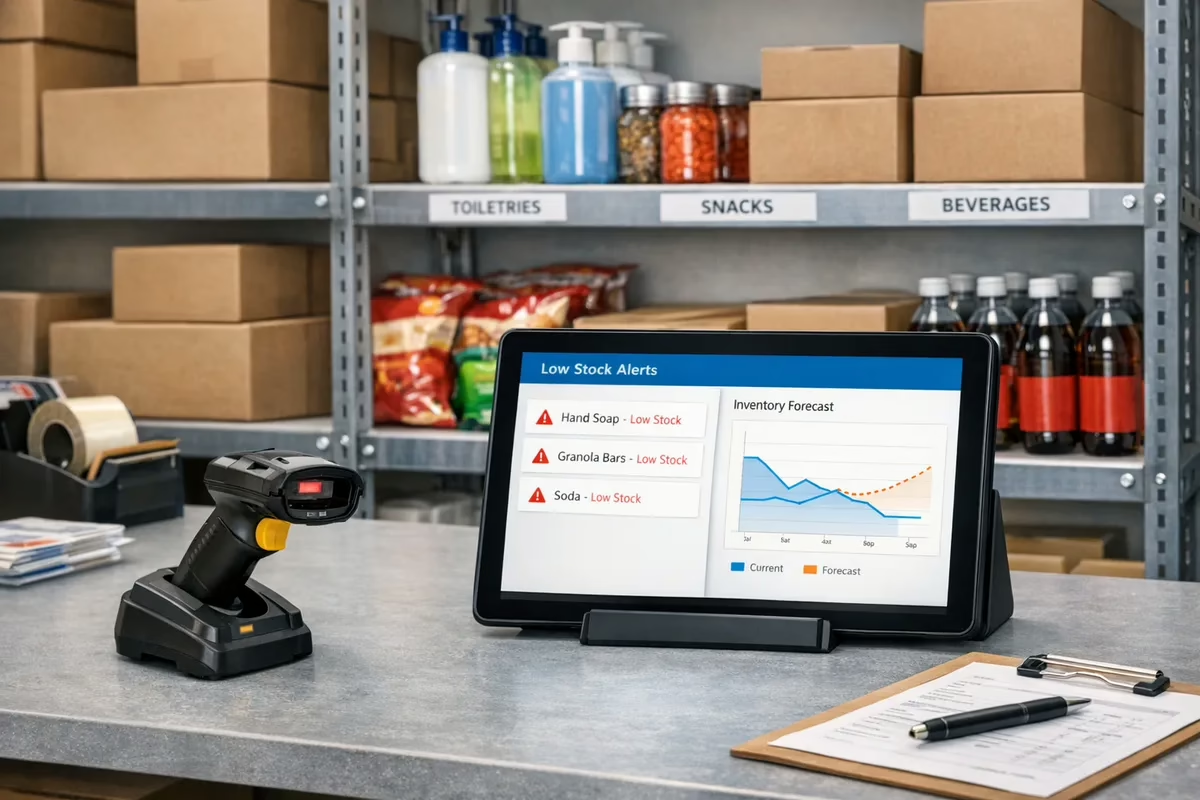
Inventory Systems That Scale: Prevent Stockouts, Forecast Demand, and Cut Waste
Real‑time tracking and forecasting protect margin. When demand signals don’t flow through your stack, you get the bullwhip effect—small demand shifts turn into big swings upstream.
MIT Sloan’s foundational analysis explains how visibility and feedback loops tame volatility. If you stock physical goods, read the overview of the bullwhip effect to see why better data flow boosts profit.
Start with perpetual inventory, low‑stock alerts, and vendor lead‑time data. Every avoided stockout is a saved sale.
Outsourced Web Development vs In‑House for Small Companies: Cost, Speed, and Risk Comparison
Outsourcing compresses time‑to‑value when you lack in‑house bandwidth. In‑house shines for ongoing product companies with steady pipelines and hiring capacity.
To benchmark staffing costs, the U.S. Bureau of Labor Statistics lists median wages for web developers and digital designers—context that helps SMBs compare full‑time hiring to project‑based services. See the BLS occupation page for Web Developers and Digital Designers.
Hybrid models—small internal product ownership plus outsourced surge capacity—often deliver the best of both worlds for SMBs.
Choosing the Right Tech Stack and Architecture for SMB Growth (Security, Scalability, Integrations)
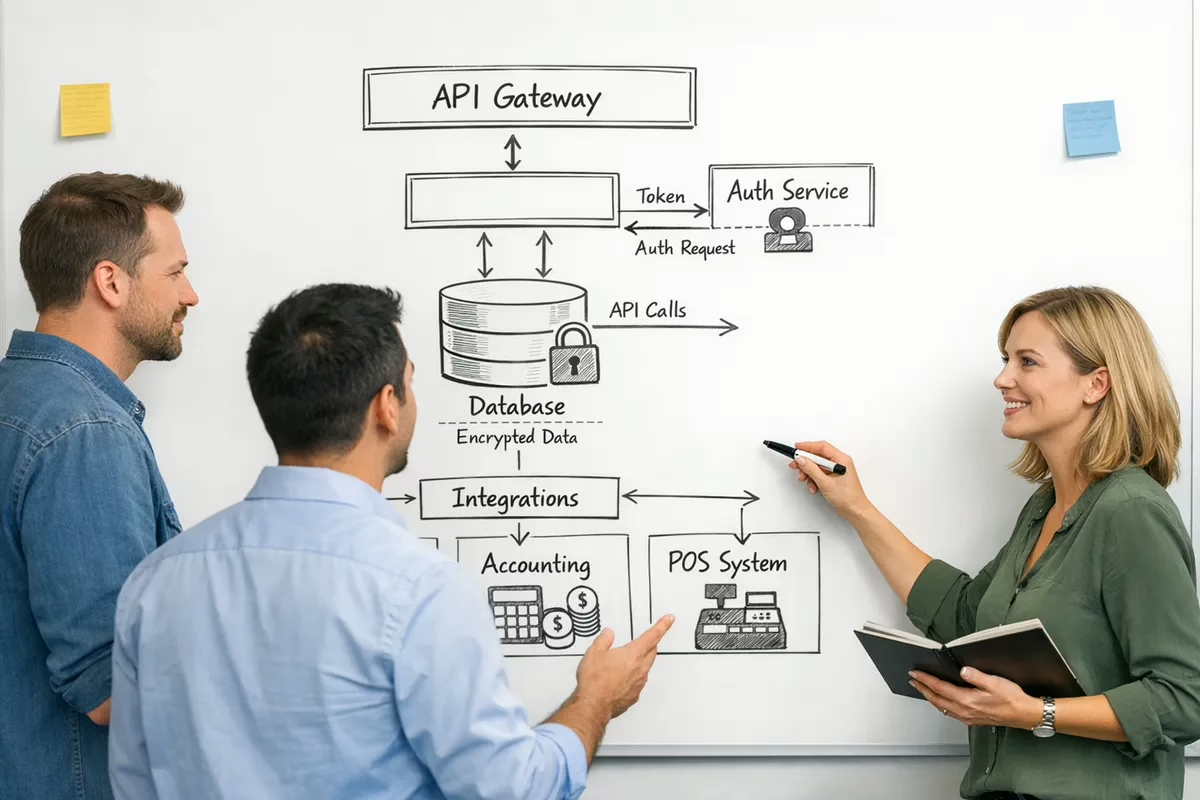
Pick boring, proven tech for core workflows and layer in modern components where they pay off. Prioritize secure design, integration readiness (APIs/webhooks), and resource efficiency.
The AWS Well‑Architected Framework’s six pillars—operational excellence, security, reliability, performance, cost, and sustainability—offer a clear checklist for trade‑offs as you scale. Start with the official overview: What is AWS Well‑Architected?
Practical guardrails
Favor managed services, encrypt data in transit/at rest, and treat integrations as first‑class citizens so future systems can plug in cleanly.
ROI of Web Application Modernization for Growing Businesses: Metrics, Benchmarks, and Payback Periods
Track what the CFO cares about: DSO, conversion rate, cycle time, order accuracy, and support cost per ticket. Tie each metric to a feature.
Independent TEI studies often show fast paybacks for targeted modernization; as one example, Forrester reported a 235% ROI with sub‑six‑month payback for an application security rollout—useful as a benchmark for sizing your own business case. Read a representative TEI summary here.
Build a simple model: baseline → expected lift → cost → sensitivity analysis. Decide, ship, measure, iterate.
Implementation Roadmap: From Discovery to Launch Without Disrupting Operations
A lightweight, gated plan keeps you on track. Start with discovery and technical validation, then ship an MVP, iterate, and train your team.
PMI’s project life‑cycle framing is a helpful scaffold—feasibility, design, build, test, deploy, close—adapted for small teams and short sprints. Skim PMI’s overview of project phases to align stakeholders: Project lifecycle basics.
Week‑by‑week view
Week 1–2 discovery; Week 3–5 MVP; Week 6 UAT; Week 7 launch + training; Week 8 backlog grooming. Protect business hours with off‑peak releases.

Integrations That Matter: CRM, Accounting, POS, and Marketing Automation
Revenue follows clean data. Connect your CRM to invoicing, bookings to calendars, and inventory to POS so every touchpoint is in sync.
Customer expectations and trust are evolving quickly with AI in the loop; Salesforce’s research highlights the importance of transparency and personalization for loyalty. Use these insights to pick integration priorities. See the State of the AI Connected Customer highlights.
Map your top two “lead → sale → invoice → reorder” flows and automate the handoffs first.
Security, Compliance, and Data Protection Essentials for SMB Web Apps
Security is table stakes—MFA, least privilege, patching, backups, and encryption should be non‑negotiable. Document roles and incident response before you need them.
NIST’s Cybersecurity Framework 2.0 adds a “Govern” function and expands guidance for organizations of all sizes, with quick‑start materials for small businesses. Review the 2024 CSF 2.0 update from NIST here.
Align your roadmap with a few CSF outcomes each quarter to raise your security floor without stalling delivery.

How to Evaluate a Web App Services Partner: Questions, SLAs, and Case Study Red Flags
Interviews beat RFPs for SMB speed. Ask about delivery cadence, change control, QA, and handover. Insist on clear ownership of IP and environment access.
SLAs should be plain‑language commitments on uptime, response, and fix times; Atlassian’s explainer is a helpful primer for non‑technical teams. Read “What is an SLA?” on Atlassian.
-
- Business outcomes first: What revenue/efficiency metrics will this hit in 60–90 days?
- One team, one backlog: How will we prioritize and ship weekly?
- Evidence: Show me a similar SMB app and the before/after.
- Risk plan: What’s the rollback if launch impacts operations?
Case Snapshots: SMB Success Stories with Booking, Invoicing, and Inventory Web Apps
A boutique salon replaced manual scheduling with self‑serve booking, reminders, and deposits, filling late‑day gaps and reducing missed appointments.
A professional services firm automated invoicing with embedded pay links and auto‑reconciliation, shrinking month‑end from five days to one afternoon while improving client experience.
A specialty retailer adopted perpetual inventory with low‑stock alerts and vendor lead‑time tracking, cutting rush orders and saving margin during peak season.
A cabinet manufacturer now has a website allowing customers to customize and order cabinets online.

Next Steps: Explore Our Web App Services and Pricing (Conclusion and CTA)
Modern web apps help SMBs grow revenue, speed cash flow, and eliminate busywork—fast. Start with one high‑leverage workflow, integrate it with your systems, and measure the impact.
With the right partner and a lean roadmap, you can deliver value in weeks, not quarters. Pick proven patterns, protect security basics, and iterate toward what works.
If you’re ready to move, we’ll scope a pragmatic MVP and a realistic budget—no fluff. Explore our offering and request an estimate: Neolynx Web Development Services.
FAQs
Do web apps really move the needle for small teams? Yes—targeted apps shorten sales cycles and reduce admin time, which translates into faster revenue recognition and better margins. Start with one workflow (booking, invoicing, or inventory) and expand once you see measurable wins.
Is custom development too expensive for SMBs? Not necessarily. A scoped MVP with clear outcomes can fit modest budgets, especially compared with the ongoing costs of manual processes. Use time‑boxed sprints and a single backlog to stay focused.
How do I estimate ROI before building? Tie features to metrics you already track. Model payback using DSO, utilization, conversion rate, and support cost. Run a sensitivity analysis so you know which assumptions matter most.
What if I don’t have in‑house IT? That’s common. Outsourced teams handle delivery while you own the outcomes. Keep governance simple: a weekly demo, a shared backlog, and a named product owner on your side keep projects on track.
Ready to move fast?
and leave with an actionable plan.